
The teams perform best when they feel safe, respected and led by shared values. A good team is not just a group of people working together, but a small unit where each member brings different skills and works for a common purpose. Apparent goals, accountability and mutual trusts focus and unite the group.
At the same time, teams often face obstacles that obstruct progress. Issues such as low trusts, fear of open discussion, weak commitment, lack of accountability or ignoring results can catch a group back. Many of these challenges stem from natural emotional reactions when people feel afraid or insecure.
Psychologists such as Maslo have long shown that people should meet their basic needs, related, and self-values before fulfilling. The same is true in teams. Without a safe and supportive environment, members become defensively, making it difficult for the team to grow or succeed.
What Is a Dysfunctional Team?
A team becomes dysfunctional when people in a team are unable to work well together to achieve shared goals. This is usually caused by personal problems or problems as the team works. It can look different in each team. Sometimes the leader is controlling and doesn’t listen. Other times, team members are quiet and don’t share what they really think.
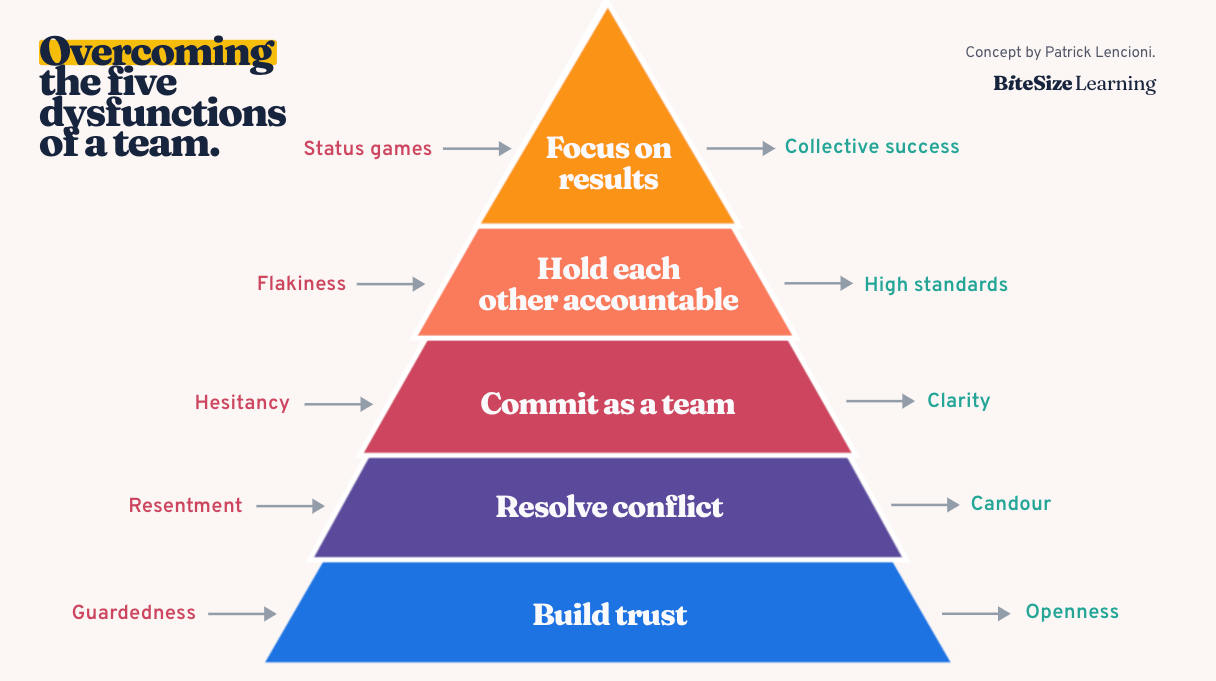
There are many signs that indicate when a team does not work properly. Consultant Patrick Lencioni explained these problems in his famous book The Five Dysfunctions of a Team: A Leadership Fable, published in 2002. Before he looked at the main signs of dysfunction, Lencioni said it helps to know the five areas where a team is out of balance.
Eliminating The Team’s Main Dysfunctions
There are five clear signs that we can see when a team is dysfunctional:
1. Lack of Trust
Trust is the basis for each strong team. Without it forming the tape that keeps people weak to cooperate together in a culture where it seems uncertain to be open. In such an environment, team members hesitate to share ideas or cooperate with honesty, which harms both personal welfare and the quality of the work.
2. Lack of Commitment
Commitment is necessary for the team to move forward together. One of the main drawbacks occurs when there is no clear direction, which causes members to be spread and disconnected. In order to thrive a team, everyone must match the same vision, have clarity in goals and be ready to fully dedicate to both personal and shared purposes.
3. Fear of Conflict
Conflict often seems negative, but not all conflict is harmful – some is necessary. There is a need to express and work on different perspectives in a healthy way. When people avoid communicating due to fear of disagreement, the team may be united on the surface but carry hidden tensions. These issues eventually come out in harmful ways, while open and constructive discussion prevents such problems.
4. Inattention to Results
In a strong team, the focus is always on collective success rather than personal victory. But when the members first gave their own ambitions, the shared goals of the team fall from the field. Although individual contributions should be important, they should not take care of the overall goal, otherwise the team’s ability to achieve real success will be compromised.
5. Avoiding Responsibility
Accountability means that individuals take ownership of their work and are also free to challenge others to meet agreed-upon standards. When responsibility is missing, neither personal accountability nor peer accountability is enforced. Over time, expectations are lowered, quality deteriorates, and low performance in the team becomes accepted as normal.
Strengthening Your Team: Workshops in Melbourne
If you want to move your team to integration, then investing in professional growth may lead to a real difference. Our organization offers leadership and team-building workshops in Melbourne, that explore proven models like Lencioni’s Five Dysfunctions and Maslow’s Hierarchy of Needs. Participants learn to build faith, attach to producers’ conflicts, and hold each other accountable in a supportive environment.
Spaces are limited, so book your seat to give your team the tools that they need to thrive. Whether you are a new leader or an experienced manager, our Melbourne programs are designed to promote major materials for respect, clear communication and key commitment – lasting success.